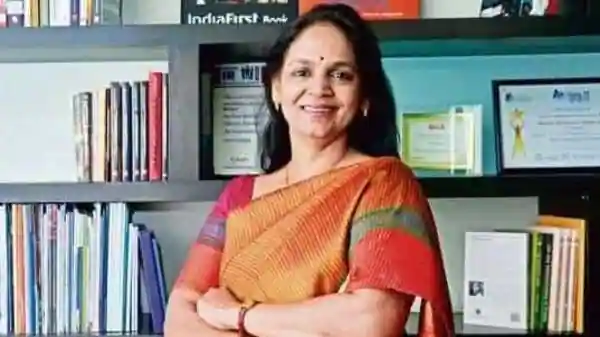
In April 2020, when covid hit India and the country went into lockdown, Mint spoke to industry leaders in the financial services space to understand the impact of the pandemic on their personal investment portfolios. With the passage of a year, we are going back to our respondents to see how things have panned out and whether there are any lessons for investors. In the third part of the series, we talk to R.M. Vishakha, managing director and chief executive, IndiaFirst Life Insurance Co. Ltd.
Vishakha does not fit the traditional mould of those who invest heavily in markets. Instead, real estate at 70% occupies the largest share of her portfolio. The share of equity in her portfolio has dipped marginally from 15% to 12%, while real estate has gone up from 65% to 70%.
Vishakha told Mint that she intends to keep booking profits in mutual funds. She is not keen on increasing her allocation to gold and does not invest in international funds.

View Full Image
“There can be further erosion of savings and increase in borrowings amid the second wave,” she said.
Much of her equity allocation is through unit-linked insurance plans. Her exposure to small-cap funds is through portfolio management services. She has also accumulated savings in the Employees Provident Fund and National Pension System.
Besides, her total term insurance cover is around ₹10 crore. She has calculated her insurable value the way it should be, i.e., based on the potential earning capability that includes her current income, expected income and years of income generation. She has a health insurance coverage of ₹25 lakh via an individual health policy.
DIVERSE APPROACH
Vishakha’s portfolio illustrates the diversity of approaches that an investor can take. While real estate may not be an easily investable asset for a retail investor, this can change for those who have accumulated large savings and understand the asset class well. Vishakha’s portfolio also underscores the importance of insurance in one’s financial life—term insurance to protect one’s financial dependents and health insurance for protection against illness.