kingson on July 7, 2022 No Comments
[ad_1]
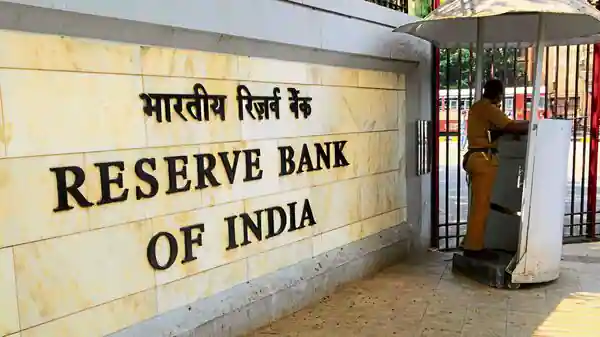
Measures announced by the Reserve Bank of India easing overseas borrowings by companies, including doubling the annual limit under the automatic route to $1.5 billion and raising the all-in cost cap for foreign debt, though welcome, will do little to spur the market in the near term, experts said.

View Full Image
Companies raised $6.4 billion through offshore bond sales in the six months ended 30 June, the lowest in four years.
Industry experts said that the offshore bond market is virtually closed for emerging market issuers, especially high yield or so-called junk bond issuers, because of uncertainties around rate hikes, and it is unlikely to open up any time soon.
Offshore bond markets had been highly receptive to Indian issuers in the past three years, and several companies tapped the market to raise dollar debt at competitive rates. Indian companies raised $11.9 billion, $10.2 billion and $12.8 billion in the first six months of 2021, 2020 and 2019, respectively, shows data from financial markets tracker Refinitiv. Fundraising in 2022 was dominated by Reliance Industries, which raised $4 billion through overseas bonds in January.
“Both the risk appetite and the interest rate scenario have turned against the market. So I don’t think we will see the market open up in a hurry,” said Pramod Kumar, managing director and head of investment banking at Barclays Bank India.
Given the current market context, RBI’s moves are likely to have a marginal impact on the fundraising environment for firms, added Arun Saigal, managing director and head of global finance at Barclays Bank India.
“The recent slowdown in capital market issuances has been driven chiefly by global market conditions, asset price corrections and redemptions that fund managers have seen in recent months. As a result, there has been a widening of spreads and a slowdown in new issuances. So in this scenario, the RBI measures will only have an impact on the margins, and we don’t expect too many issuances to happen because of these measures in the near term until the market stabilizes,” he said.
“In addition, given where the prices are in the international markets, for a lot of Indian corporates/issuers, there are cheaper alternatives available in the INR market, and there is no pressure to seek access to foreign debt.”
Sameer Gupta, head of India DCM (debt capital markets) at Deutsche Bank, said functional credit markets require risk appetite and a benign rate environment, and currently, both of them are very negative due to the stressed geopolitical environment and one of the worst inflation cycles.
“As of now, there is no respite as inflation prints are persistently high. So the concern is that central banks will have to keep on increasing rates. Primary debt capital markets are effectively shut as investors remain uncertain of the forward rate trajectory and the consequent fallout of higher rates on the broader economic backdrop,” he said.
Gupta said the market is waiting to see when the interest rate environment becomes benign.
“That is difficult to call. Markets will start opening up once an expectation of a rate pause or easing sets in…It will be sequential, with investment-grade first followed by high yield,” he said.
Experts said the interest rate rise in the US and the negative investor sentiment pushed yields higher, making offshore debt an unattractive option for companies at this point in time, especially when top-rated issuers can raise rupee debt locally at relatively cheaper rates.
To be sure, some experts believe that the RBI relaxations may provide some respite for corporates looking to tap the offshore debt markets.
“Raising the limit on the automatic route would definitely ease the operation. The measures on FCNR deposits demonstrates the intent of RBI. It will result in stabilisation of currency which will be helpful,” said Ganeshan Murugaiyan, head of corporate coverage and advisory, BNP Paribas India.
However, he added that the increase in the all-in-cost cap will not result in issuances in near term as IG (investment grade) corporates may not find it attractive to borrow at such high rates but it is a good step in the long-term.
[ad_2]
Source link
leave your comment
Advertisement






